For businesses in the Greater Cincinnati area, property damage means far more than just costly repairs; it means business interruption and lost revenue. When water strikes a commercial building—whether it’s a failed sprinkler system, a major plumbing leak, or severe flooding requiring storm damage restoration Cincinnati OH—the stakes are immediately higher than in a typical home.
While both residential and commercial projects require expert water damage experts, the approach, equipment, and urgency are fundamentally different. A residential job focuses on comfort and belongings; a commercial job focuses on preserving structural integrity and mitigating financial loss.
At 1st Call Disaster Services, our IICRC-certified team provides specialized commercial water damage restoration Cincinnati services, designed for the scale and complexity that businesses demand. This guide breaks down the core differences and details what every facilities manager and property owner needs to know about rapid disaster recovery.
Key Takeaways
For businesses in Cincinnati, effective disaster recovery hinges on specialized expertise and speed.
- Risk is Revenue: Commercial loss means business interruption. You need a rapid, emergency storm damage response 24/7 that prioritizes facility stability.
- Scale Demands Specialty: Commercial structures require large-scale water extraction and technical complex structural drying to remove hidden moisture from dense materials.
- Liability Focus: 24/7 flood cleanup Cincinnati and storm damage restoration Cincinnati OH must include thorough sanitization to protect against biohazards and mold growth.
- Documentation is Key: Choose a professional water damage company that provides detailed, standardized reports to substantiate your commercial insurance claims.
- Choose Certified: Always select an IICRC-certified team for professional water damage restoration Cincinnati OH.
1. The Critical Differences: Scale, Speed, and Structure
The primary distinctions between commercial and residential restoration projects center on risk and scale. A commercial facility, whether it’s an office tower, a warehouse, or a retail space, requires an entirely different operational approach.
Difference A: Business Interruption vs. Displacement (The Time Factor)
In a residential loss, the homeowner is temporarily displaced from their home. In the event of a commercial loss, business interruption occurs immediately, resulting in revenue loss, payroll issues, and potential breach of contract liabilities.
- Commercial Need: The priority is rapid turnaround. Commercial restoration requires a large team capable of deploying powerful, large-scale water extraction equipment and completing the work within the tightest possible timeframe, often necessitating work outside of regular business hours or around business operations. This is why having a 24/7 emergency storm damage response plan is non-negotiable for businesses.
Difference B: Structural Materials and Complexity
Residential properties primarily use wood framing, light insulation, and drywall. Commercial properties often feature dense, low-porosity materials that trap water differently.
- Commercial Need: Complex structural drying is necessary. Commercial concrete slabs, dense insulation, and layered roofing systems absorb moisture slowly but hold it for much longer. This requires specialized industrial dehumidifiers and highly technical moisture mapping that goes far beyond standard residential drying protocols.
Difference C: Contamination and Health Liability
A commercial flood often involves water from multiple sources (commercial restrooms, industrial coolant, storm runoff) that could be contaminated water.
- Commercial Need: The risk of liability for exposing employees or the public to microbial growth or other biohazards is massive. Professional 24/7 flood cleanup Cincinnati ensures not only water removal but comprehensive sanitization and verifiable testing to secure a safe environment before reopening.
2. Commercial Disaster Scenarios: Responding to Cincinnati’s Weather Threats
Businesses in the Greater Cincinnati area are uniquely exposed to rapid weather changes. Our emergency storm damage response 24/7 service is designed to handle these specific commercial threats:
Scenario 1: Severe Storms and Wind Damage
Cincinnati’s exposure to high winds and heavy thunderstorms often results in immediate roof failures, shattered windows, or breaches in siding. This results in direct water intrusion, requiring immediate storm damage restoration Cincinnati OH.
- Action: 1st Call Disaster Services provides immediate temporary repairs (board-up, tarping) to seal the structure against further water damage before the main water removal service begins.
Scenario 2: Large-Scale Plumbing/HVAC Failures
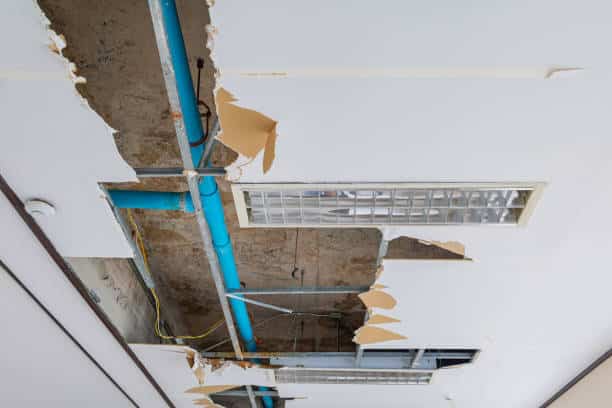
A single failed sprinkler head or a ruptured commercial cooling unit on a high floor can damage multiple floors below, requiring water damage restoration Cincinnati OH across thousands of square feet.
- Action: This requires the immediate deployment of multiple extraction crews to contain and remove water from high-value areas, such as server rooms or retail inventory spaces.
Scenario 3: River and Sewer Backup Flooding
When the Ohio River or the local sewer system is overwhelmed, the resulting 24/7 flood cleanup in Cincinnati is a dangerous biohazard situation.
- Action: The complete removal of all porous materials (carpet, ceiling tiles, drywall) and the implementation of intense sanitization protocols using EPA-registered antimicrobial treatments are mandatory to avoid the severe liability risk associated with contaminated water.
3. The Specialized Commercial Restoration Process
Commercial restoration requires specialized equipment and training, which is why a typical residential water damage company may struggle to meet these needs.
A. Phase 1: Rapid Mitigation and Water Removal
Our emergency storm damage response 24/7 team arrives quickly to initiate water mitigation. We utilize powerful, dedicated commercial pumps for large-scale water extraction and establish immediate moisture barriers to prevent water from reaching unaffected areas. This swift response minimizes business interruption.
B. Phase 2: Complex Structural Drying
Instead of just aiming at fans, we create a controlled drying chamber. Our team uses specialized equipment to tackle the dense materials:
- Low-Grain Refrigerant Dehumidifiers: These devices are essential for removing moisture from concrete, masonry, and subfloors—the primary components of commercial structures.
- Moisture Mapping: We track moisture migration throughout the structure using thermal imaging and advanced moisture meters to ensure every hidden pocket of moisture is eliminated, protecting the building’s structural integrity.
C. Phase 3: Secondary Damage Prevention (Mold and Deodorization)
Any commercial water damage event must prioritize the prevention of mold growth. Our team applies antifungal agents and closely monitors air quality. If mold growth is detected, immediate containment and remediation are initiated to protect employees and liability.
4. Navigating the Commercial Insurance Claim Process
Commercial insurance claims are more detailed than residential claims, often involving multiple endorsements, such as business interruption coverage.
1st Call Disaster Services assists facility managers by providing the detailed documentation needed to streamline the process:
- Xactimate Estimates: We provide detailed estimates using industry-standard software recognized by all major commercial insurers.
- Business Interruption Data: We document the scope of the loss and the timeline of water removal service to help substantiate the business interruption portion of your claim.
- IICRC Compliance: Our status as an IICRC-certified team ensures that our procedures meet the highest standards, minimizing scrutiny from commercial insurance claims adjusters.
When your business needs expert commercial water damage restoration Cincinnati, choose the water damage company that understands commercial stakes.
Frequently Asked Questions (FAQs)
Does my commercial property insurance cover damage from a river flood in Cincinnati?
Generally, no. Most standard commercial policies cover internal perils (like pipe bursts or fire sprinkler leaks) but exclude natural flood damage (water rising from the ground or a natural body of water). Businesses near the Ohio River or in flood plains must carry a separate Commercial Flood Insurance Policy to cover 24/7 flood cleanup Cincinnati costs.
Why is the response time for a commercial property so much faster?
A fast response is the best defense against catastrophic financial loss. Every minute that standing water remains increases the risk of damage to inventory, equipment, and structural components. Our 24/7 emergency storm damage response prioritizes commercial calls because the potential for business interruption and large-scale water extraction is particularly significant.
What is "complex structural drying," and how does it differ from residential drying?
Complex structural drying involves removing moisture from dense, low-porosity materials like concrete, brick, and specialized commercial insulation. Residential drying is simpler. Commercial projects require high-capacity, low-grain industrial dehumidifiers that can operate for extended periods to prevent hidden moisture, which compromises the building's structural integrity and fosters mold growth.
Does 1st Call Disaster Services handle the replacement of specialty items like server racks or inventory?
1st Call Disaster Services manages the entire disaster recovery process. We coordinate with specialized vendors for the recovery of high-value items, document the loss of any non-salvageable inventory, and provide full property reconstruction services to replace affected structural elements, ensuring a complete return to pre-loss condition.
Will I need to temporarily close my business during the water damage restoration in Cincinnati, OH?
It depends on the scale and location of the damage. For minor, contained damage, we can often set up containment barriers and work during off-hours to prevent business interruption. For large-scale loss or contamination (such as sewage), temporary closure may be required for safety reasons. Our team works with the facilities manager to create a phased disaster recovery plan that minimizes downtime.
Protect Your Business, Minimize Downtime, and Act Fast
Every hour of delay when water damage affects a commercial property results in decreased revenue and more liabilities.
With fast storm damage response, extensive water extraction, and specialized structural drying designed for commercial premises, 1st Call Disaster Services offers 24/7 commercial water damage restoration in Cincinnati, OH.
Get in touch with our IICRC-certified staff immediately if your company is experiencing flooding, storm damage, or a plumbing issue to stabilize your property, safeguard your operations, and resume operations more quickly.